


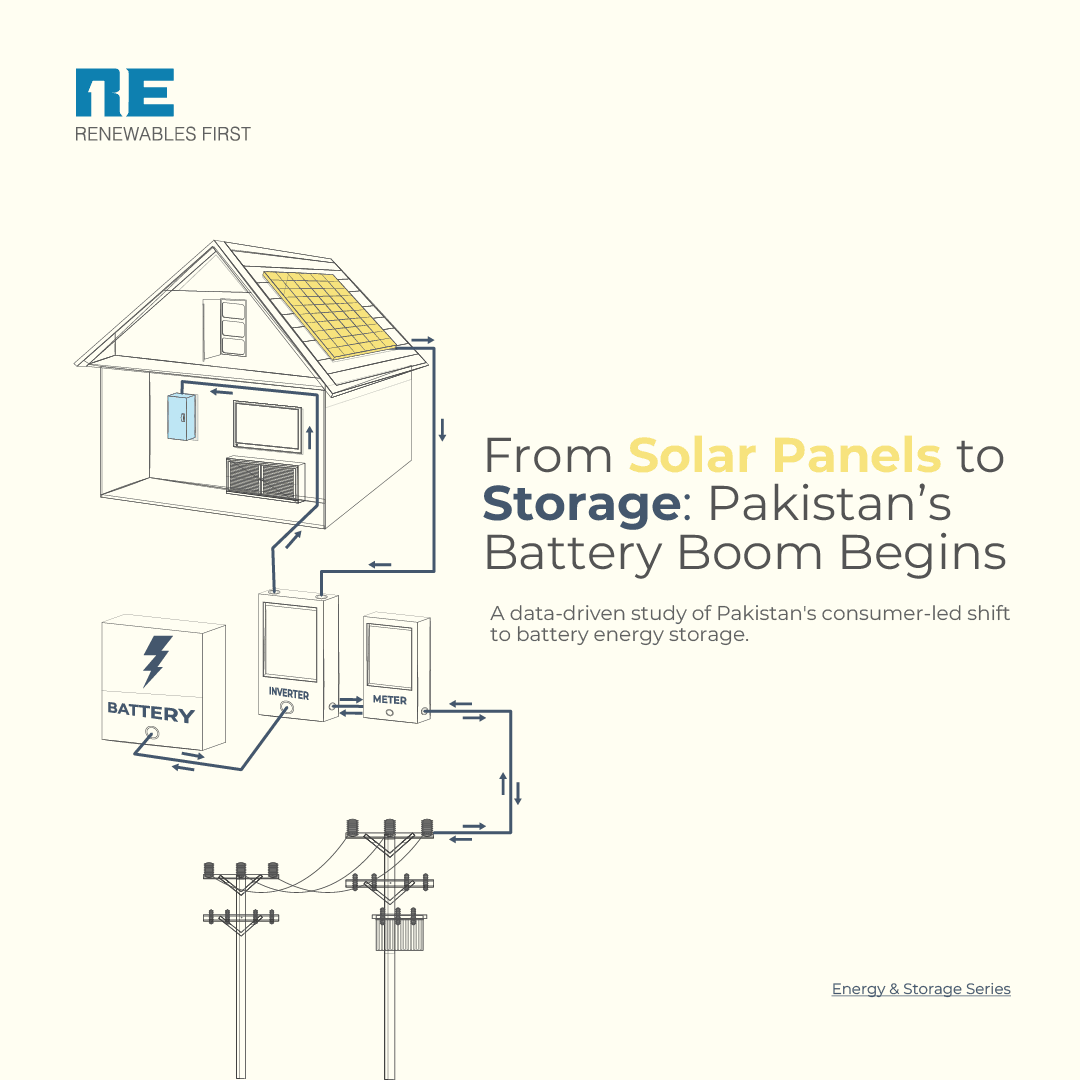
Global cumulative solar PV capacity reached a record 2,500 GW in 2025, with 600 GW added that year alone. Pakistan’s solar story reflects the same momentum, with cumulative solar PV deployed capacity reaching 38 GW by FY25, almost entirely through distributed installations. Millions of households, farms, and businesses invested their own savings in solar PV to reduce reliance on the grid. Favourable net metering policies opened the door to solar adoption, while rising tariffs, prolonged power outages, and falling Chinese solar panel prices accelerated the solar rush across the country. The result: distributed solar generated 51 TWh in FY25, even as national grid supply fell for the third consecutive year, leaving two electricity systems running in parallel, a stagnating centralised grid and a consumer-built solar fleet that official datasets barely capture. The Hormuz disruption in March 2026 exposed the energy security risks of imported fossil fuels used by Pakistan's thermal power fleet, while consumer energy resources (CERs) continued generating uninterrupted electricity. Battery storage is following the rooftop solar's growth trajectory. Falling Lithium Iron Phosphate (LFP) battery prices, driven by China's manufacturing scale and declining raw material costs, continue to improve the economics of distributed storage. Increasingly, solar owners are investing in Lithium-ion batteries to store surplus solar electricity for evening use and reduce the impact of high tariffs and unfavourable net billing. Lithium-ion battery energy storage system (BESS) imports rose 220% year-on-year (YoY) to 4.6 GWh in calendar year 2025. With distributed solar reshaping Pakistan's electricity sector at pace, battery storage has moved from a niche add-on to a structural necessity. It anchors energy security at the local level while ensuring rooftop solar delivers its full economic and operational value.
.png)
.png)
.png)