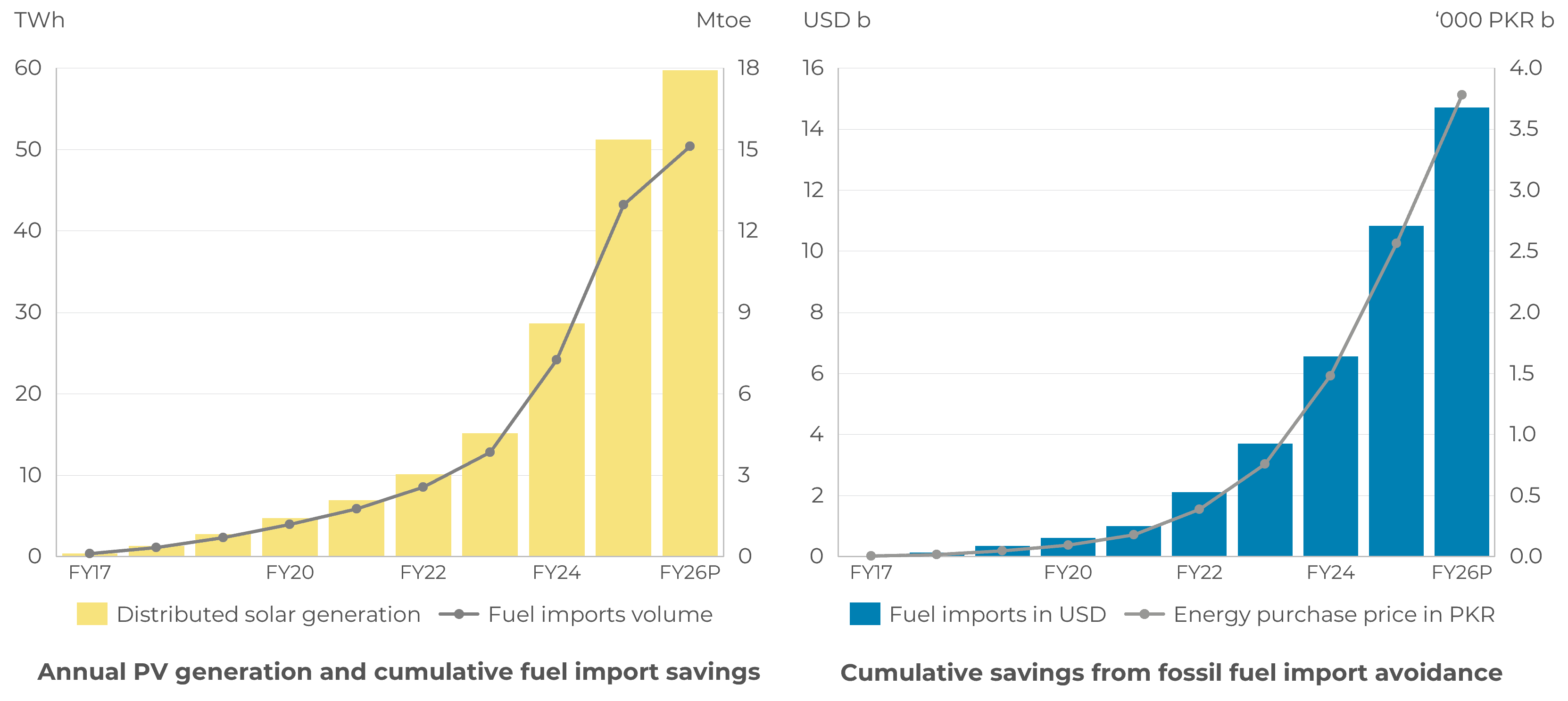
Distributed solar is the missing piece in Pakistan’s energy statistics. Official figures show primary energy supply rising by just 1.6% in FY25, while reported energy consumption grew by 8%. However, these figures do not account for an additional source of energy generated through rooftop and other distributed solar systems. Once that solar is counted, Renewables First’s analysis shows supply and consumption have both grown steadily with the economy. This shift is delivering significant economic benefits, with distributed solar helping Pakistan avoid an estimated USD 15 billion in fossil fuel imports by FY26. Looking ahead, every dollar spent on imported solar panels and inverters is projected to save more than nine dollars in fossil fuel imports over FY27–FY50, turning a one-time investment into long-term savings. In FY25, Pakistan became more dependent on imported fossil fuels, not less. Imports now make up 41% of the country’s 82 Mtoe primary energy supply, leaving the economy more exposed to global price spikes and supply disruptions. This import dependence comes at a significant economic cost. Fossil fuels have consumed more than 90% of Pakistan’s USD 128 billion energy import bill since FY20, with much of the country’s energy import spending going towards fuels that are less efficient, both economically and physically, than the renewable technologies available to replace them.
.png)
.png)